
Greetings, Earthlings (and Soon-to-Be Moonlings)!
For the first time in more than fifty years, humans are practically heading back toward the Moon. At the same time, robotic explorers are reaching destinations they’ve spent nearly a decade traveling toward. Add in rare eclipses, meteor showers under dark skies, and the debut of the first commercial space station, and one thing becomes clear: 2026 isn’t just another year on the space calendar. It’s a turning point.
For Space Club members, this year offers a front-row seat to the rise of the New Space era; where governments, private companies, and international partners are all shaping humanity’s next steps beyond Earth.
2026 Space Calendar: At a Glance
January 10 – Jupiter at opposition
February 5 – Artemis II launch (target date)
February 17 – Annular solar eclipse
March 3 – Total lunar eclipse
March – Gaganyaan-1 (India’s first uncrewed human spaceflight test)
April – Starliner-1
May – Haven-1 launch
May – Psyche Mars flyby
June 9 – Jupiter, Venus, and Mercury conjunction
July 4 – Mars and Uranus Kiss (0.1° apart)
August 12 – Total solar eclipse
August 13 – Perseid meteor shower peak
August – Chang’e-7 launch
November – BepiColombo arrives at Mercury
December – Hera arrives at Didymos
December 24 – Christmas Supermoon
The Missions That Matter
Humans Return to Deep Space: Artemis II
If there’s one mission that defines 2026, it’s Artemis II.
This is the first crewed mission to leave low Earth orbit since Apollo 17 in 1972. Four astronauts; Reid Wiseman, Victor Glover, Christina Koch, and Jeremy Hansen, will spend ten days aboard NASA’s Orion spacecraft, looping around the Moon before returning home. This will happen between February and April.
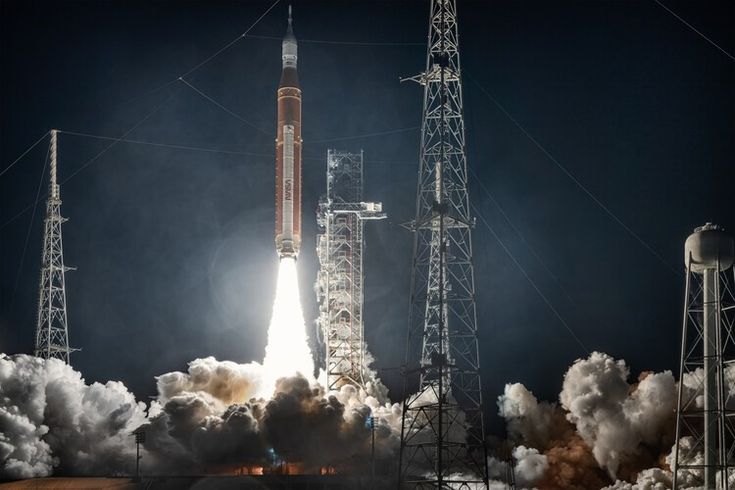
Now, they won’t land yet, but that’s not the point. Artemis II is about proving that humans can survive, work, and operate safely in deep space again. Every system onboard, from life support to navigation, will be pushed in ways that haven’t happened in decades. If this mission succeeds, Artemis III’s lunar landing stops being a dream and kicks into motion.
The Commercial Leap: Haven-1
For most of history, space stations have belonged to governments. That changes in May.
Vast’s Haven-1 is expected to become the world’s first commercial space station, designed for private researchers, companies, and even space tourists. Think of it as the early blueprint for a low-Earth-orbit economy, where NASA is a customer, not the landlord.
This launch signals a shift that space is no longer just a place to explore. It’s becoming a place to do business.
Robots Doing the Long Work: BepiColombo and Hera
While humans circle the Moon, robotic missions will be finishing journeys that took years of patience and precision.
BepiColombo, a joint European–Japanese mission, finally arrives at Mercury in November after an eight-year voyage involving multiple planetary flybys. Once there, it will split into two orbiters to study Mercury’s interior, surface chemistry, and bizarre magnetic field—clues to how rocky planets form and survive extreme environments.
Then there’s Hera. Arriving in December, this European mission will inspect the aftermath of NASA’s 2022 DART experiment, which was intentionally smashed into an asteroid to test planetary defense. Hera’s job is to measure the damage and tell us whether we actually know how to protect Earth from future threats, or if we still have homework to do.
Mining the Moon’s Future: Chang’e-7
China’s Chang’e-7 mission is one of the most ambitious lunar projects ever attempted. It includes an orbiter, a lander, a rover, and a small hopping probe, all aimed at the Moon’s south pole.
The target is Shackleton Crater, a region that never sees sunlight. Why go somewhere so dark and cold? Because it may contain water ice. And water, in space, means everything. It means drinking supply, breathable oxygen, and rocket fuel.
Chang’e-7 is about to lay the groundwork for permanent human presence on the Moon.
For Those Who Watch the Sky
Not all the excitement requires rockets.
On August 12, a total solar eclipse will sweep across Greenland, Iceland, and northern Spain—the first total eclipse visible from mainland Europe since 1999. Earlier in the year, on March 3, a total lunar eclipse will turn the Moon deep red for observers across the Americas and parts of Asia and Australia.
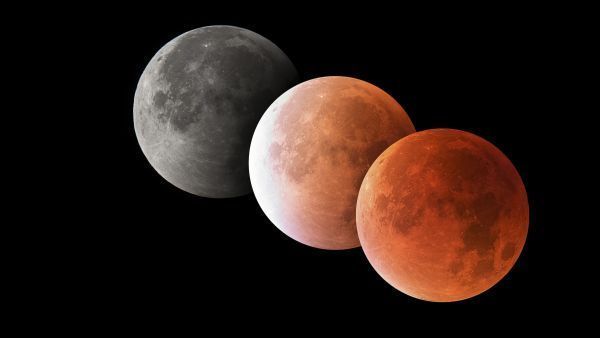
And in August, the Perseid meteor shower peaks under a New Moon, creating ideal conditions to see up to 100 meteors per hour streak across a dark sky.
Then the year would end on a festive note with a Supermoon on Christmas Eve. Because the Moon will be at “perigee” (its closest point to Earth), it will appear about 14% larger and 30% brighter than a standard full moon; perfect for a holiday stargazing session.
Will you be ready to watch?
Are You Sat?
2026 is the year where the universe reminds us how epic it truly is. From stepping closer to our lunar dreams to building new outposts in the sky, the future of space is bright!
Make sure you follow the club’s updates, attend meetings, and let’s keep discussing these mind-blowing events. Who knows, maybe one day it’ll be a Nigerian mission on this list.
Stay Cosmic!

It really gladdens my heart to see the activities and plans all lined up for 2026. It indeed is a significant year. I must say though, my favorite is having a supermoon on Christmas eve. An amazing way to end the year indeed, it doesn’t get better than that. Thank you very much for sharing!!